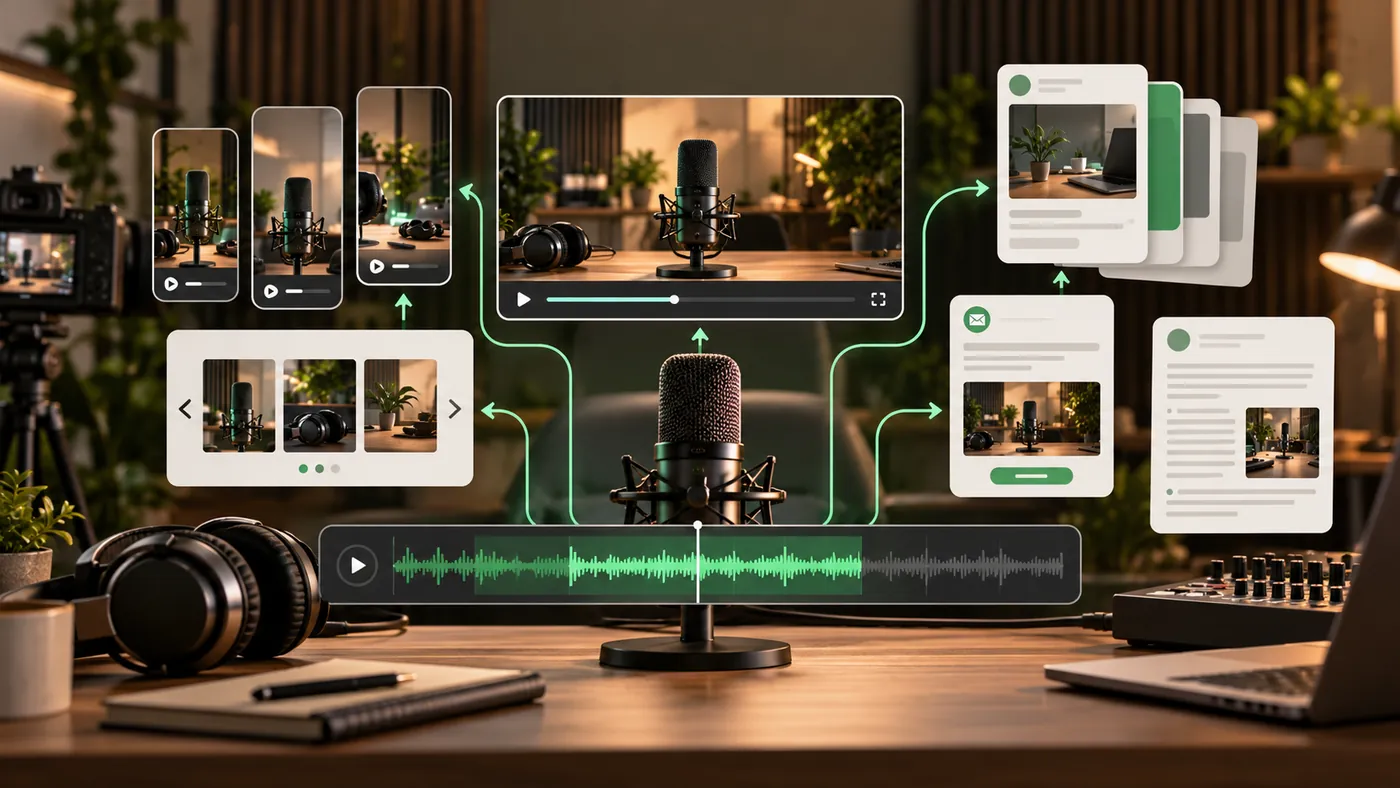
A long podcast episode usually contains several moments worth sharing. The problem is that those moments are buried inside an hour of conversation.
Repurposing is not just chopping the episode into random clips. It is finding the strongest ideas, restructuring them so they make sense alone, and packaging them for the platforms where your audience spends time.
Step 1: find the useful moments
Look for moments that do one clear thing:
- Explain a problem
- Tell a strong story
- Share a mistake
- Challenge a common belief
- Give a practical framework
- Answer a question buyers often ask
Avoid clips that only make sense if someone watched the full episode.
Step 2: rewrite the hook
The original conversation may take two minutes to reach the point. A clip does not have that luxury.
Open with the strongest sentence, question or claim. Then use the rest of the clip to support it.
Sometimes the best hook is not the first line spoken. It may be a sentence from the middle of the answer.
The topic decides the format.
Step 3: edit for clarity
Remove filler, repeated setup and side trails. Keep the clip focused on one idea.
Use captions, speaker reframing, cuts, B-roll or simple graphics only where they help the viewer understand the point faster.
Step 4: create multiple formats
One episode can become:
- Short vertical clips
- LinkedIn posts
- Newsletter ideas
- Blog outlines
- Quote graphics
- Sales enablement clips
- YouTube Shorts
The topic decides the format. A practical answer may become a carousel. A strong story may become a short video. A buyer objection may become a sales follow-up asset.
Step 5: link back to a business goal
Repurposed content should not exist only to fill the calendar. Connect it to the bigger goal: authority, trust, leads, event attendance, product education or sales support.
The takeaway
Podcast repurposing works when the best ideas are selected, sharpened and distributed with purpose. One good conversation can support a full month of useful content.