More traffic is not the only path to ecommerce growth. Sometimes the fastest opportunity is increasing the value of each order.
Bundles and upsells can help, but only when they make the purchase more useful for the customer. Pushy offers may lift short-term revenue and damage trust.
Start with the customer’s job
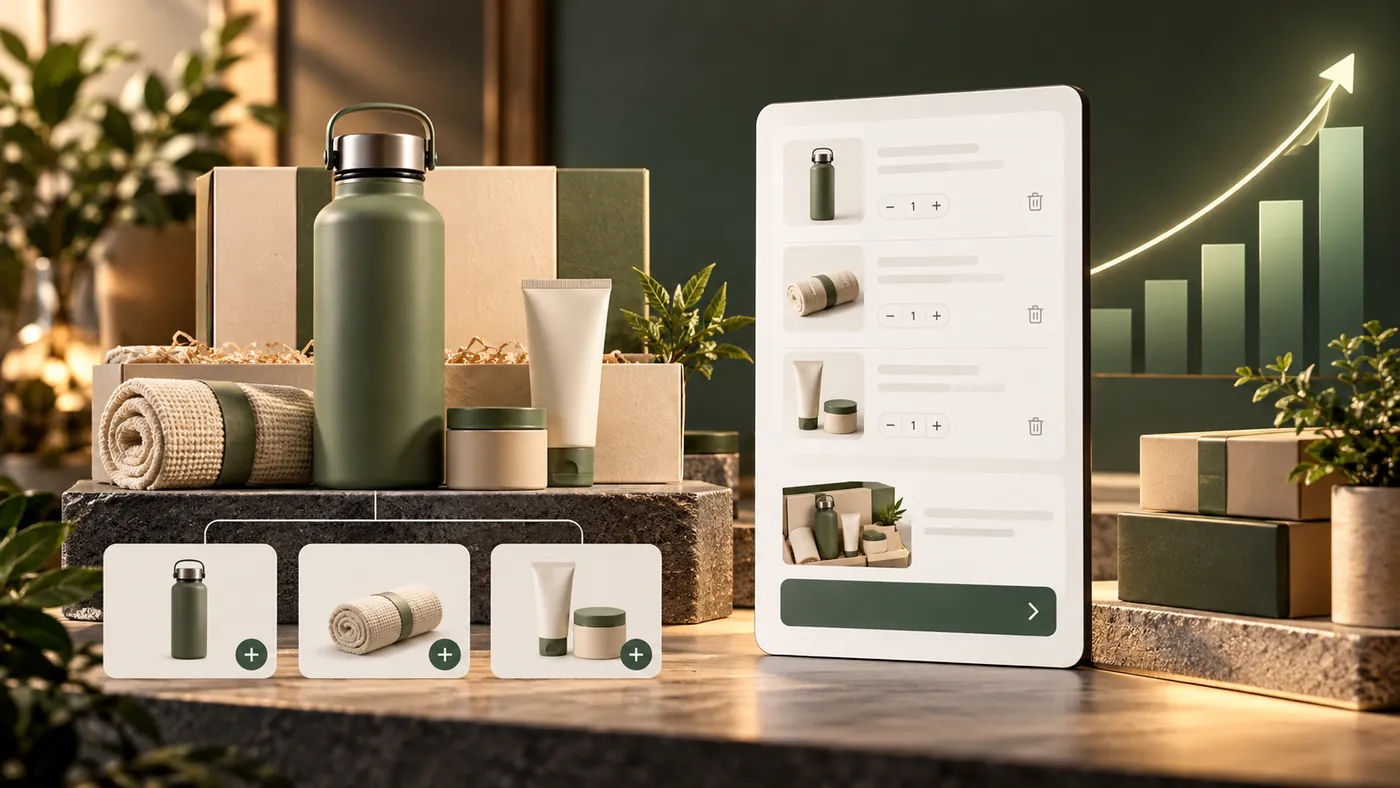
A good bundle helps the customer complete the job they came to do.
Examples:
- A skincare routine instead of one serum
- A starter kit instead of one device
- Refills with the main product
- Accessories that improve use
- Travel set instead of a single item
The bundle should feel like guidance, not pressure.
Use upsells at the right moment
Upsells work best when they are relevant to the product already chosen.
Consider:
- Product page add-ons
- Cart drawer recommendations
- Checkout-safe offers
- Post-purchase offers
- Subscription upgrade
Avoid interrupting checkout with too many decisions. The closer someone is to payment, the simpler the experience should feel.
The bundle should feel like guidance, not pressure.
Make the value clear
If the bundle saves money, say so clearly. If it saves time, explain that. If it creates a better result, show why.
Use simple labels:
- Best value
- Complete routine
- Starter kit
- Refill and save
- Frequently bought together
Measure more than AOV
Higher average order value is good only if the wider economics still work.
Track:
- Conversion rate
- AOV
- Gross margin
- Refund rate
- Subscription take-up
- Repeat purchase rate
- Customer acquisition cost
A bundle that raises AOV but lowers conversion too much may not be a win.
The takeaway
Bundles and upsells work when they improve the buying decision. The best offers help customers buy the right complete solution, not just more items.