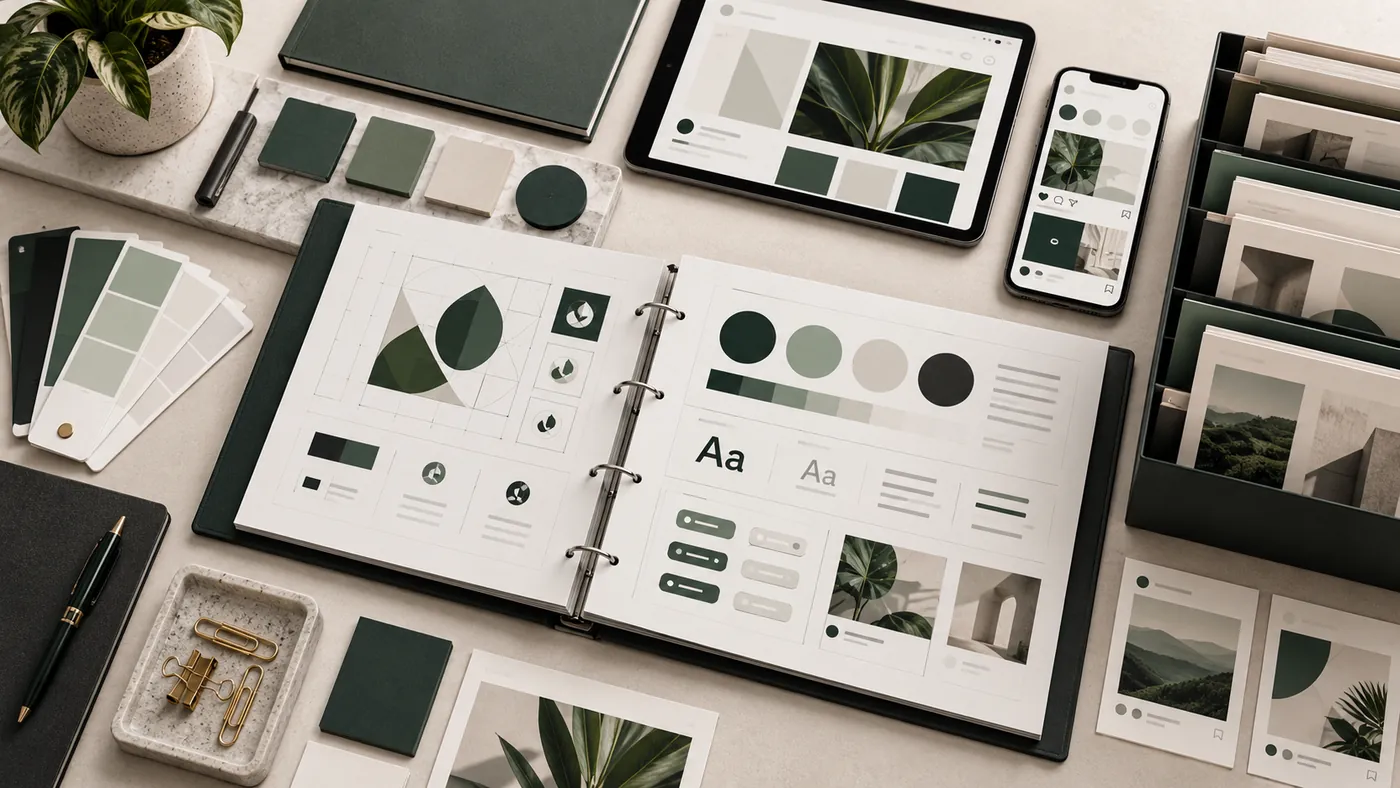
Brand consistency is easy to underestimate because it does not always feel urgent. A slightly different logo here, a different colour there, a new tone in every campaign. None of it looks like a crisis on its own.
But buyers notice. Inconsistency creates doubt. Consistency creates familiarity, and familiarity makes every marketing touchpoint work harder.
Buyers judge before they read
People form an impression of a business before they understand the offer. The website, ad creative, social profile, proposal, packaging and email signature all send signals.
If those signals feel aligned, the business looks more credible. If they feel disconnected, the buyer has to work harder to trust it.
For high-ticket services, ecommerce products and premium brands, that first impression can decide whether someone keeps reading.
Consistency saves time internally
Inconsistent brands also cost time behind the scenes.
Without guidelines, every designer starts again from scratch. Every supplier guesses. Every new campaign becomes a debate about colours, fonts, spacing and tone.
A clear identity system speeds up production. Your team can create landing pages, ads, decks, posts and print materials without reinventing the brand each time.
The goal is not to make every asset identical. It is to make every asset recognisable.
What consistency should include
Useful brand consistency covers more than a logo.
It includes:
- Logo versions and clear space
- Colour codes for digital and print
- Typography rules
- Image and graphic style
- Social and ad templates
- Website and app UI direction
- Tone of voice examples
- Do and don’t examples
The goal is not to make every asset identical. The goal is to make every asset recognisable.
How brand supports performance
Performance marketing needs trust. A strong brand helps people recognise your ads, understand your offer faster and feel more confident on your landing page or store.
That does not replace targeting, creative testing or conversion optimisation. It makes those efforts stronger.
The takeaway
Brand consistency is not decoration. It is a growth asset. It helps buyers recognise you, helps teams move faster and helps marketing feel connected.