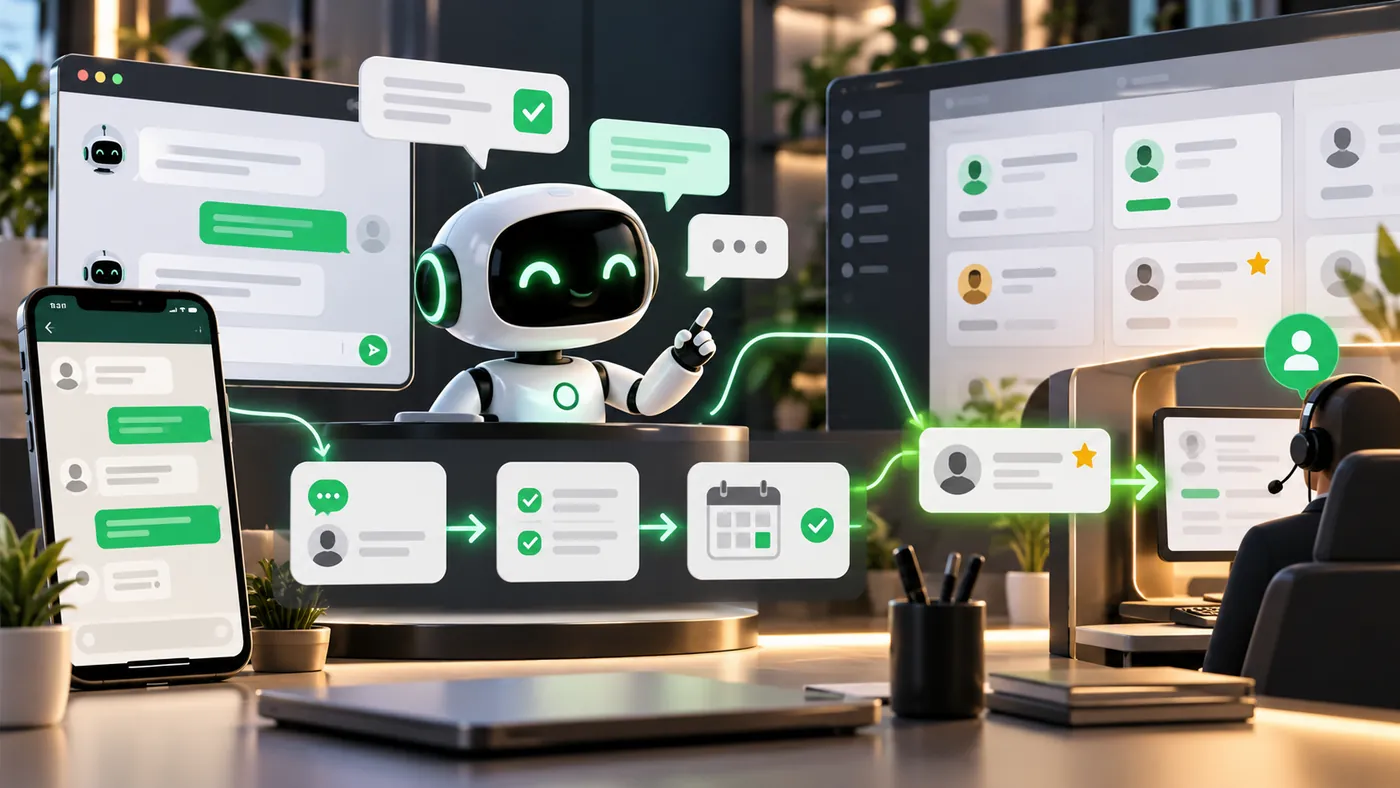
Speed matters when a lead reaches out. If someone asks about availability, pricing, booking or fit, a slow reply can lose the opportunity.
AI chatbots can help, but only when they are designed around trust. The goal is not to pretend a machine is a person. The goal is to answer common questions quickly and hand off clearly when human help is needed.
What AI chatbots can handle
A good chatbot can:
- Answer common questions
- Qualify leads
- Collect contact details
- Book appointments
- Send follow-up information
- Route requests to the right person
- Add leads to a CRM or sheet
- Reply through website chat, WhatsApp, Messenger or Instagram
The best use cases are repetitive, rule-based and easy to define.
What should stay human
AI should not handle every conversation.
Escalate when:
- The customer is upset
- The request is unusual
- Pricing needs judgement
- Legal, financial or sensitive details are involved
- The lead is high value
- The bot is unsure
Trust improves when the handoff is clear.
The goal is not to pretend a machine is a person.
Train the bot on real answers
A chatbot should be trained on your actual tone, services, FAQs, policies and process.
Do not let it invent details. Give it approved answers and clear rules for what it can and cannot say.
Log everything
Every automation should be visible.
Track:
- Messages answered
- Leads captured
- Hand-offs
- Bookings
- Failed responses
- Common questions
- Response time
Logs make the system safer and easier to improve.
The takeaway
AI chatbots work best when they make response faster without making the business feel less human. Clear rules, training, handoff and logs protect trust.